

The short, commonsense case for improving the treatment of farm animals
Farm animal mistreatment is widespread and severe, yet most of it could be eliminated cheaply through improvements that the majority of people already support

This is the first post on Shadow Price – a blog about the data and economics of farm animal welfare. Thanks for reading.
There are hundreds of billions of animals alive in the farming system at any one time. Chickens, the most farmed land animal, are killed at a rate of 75 billion every year, or 2,300 per second.
Almost all farm animals live on factory farms which pay little regard to their welfare. You may have seen the ‘pig skyscraper’ in China – the only difference between the skyscraper and most other factory farms is the height.
In most pig farms, mother pigs spend almost all their lives in crates so narrow they are unable even to turn around. The mother pigs are let out to give birth, impregnated again, and put back into their crates. Most egg-laying chickens face a similar fate – at a few weeks old, they are crammed into cages (a few chickens in each tiny cage), and will only be let out once; roughly a year later to be killed.

It’s surprising that these cruel practices endure. Around the world, large majorities want to improve farm animal welfare. And people across the political spectrum recoil at common cruel farm practices. Pigs being kept in crates, for example is unacceptable to 88% of US conservatives. When given the chance to ban some of the worst mistreatment of farm animals, voters are happy to.
This popular support is reflected by public figures. New York Times columnist Ezra Klein has written that “how we treat farm animals today will be seen, I believe, as a defining moral failing of our age.” The most popular podcaster in the world, Joe Rogan, thinks it is the “worst version of what human beings are capable of”. Best-selling author Yuval Noah Harari has called the scale of animal suffering on factory farms “one of the worst crimes in history.”
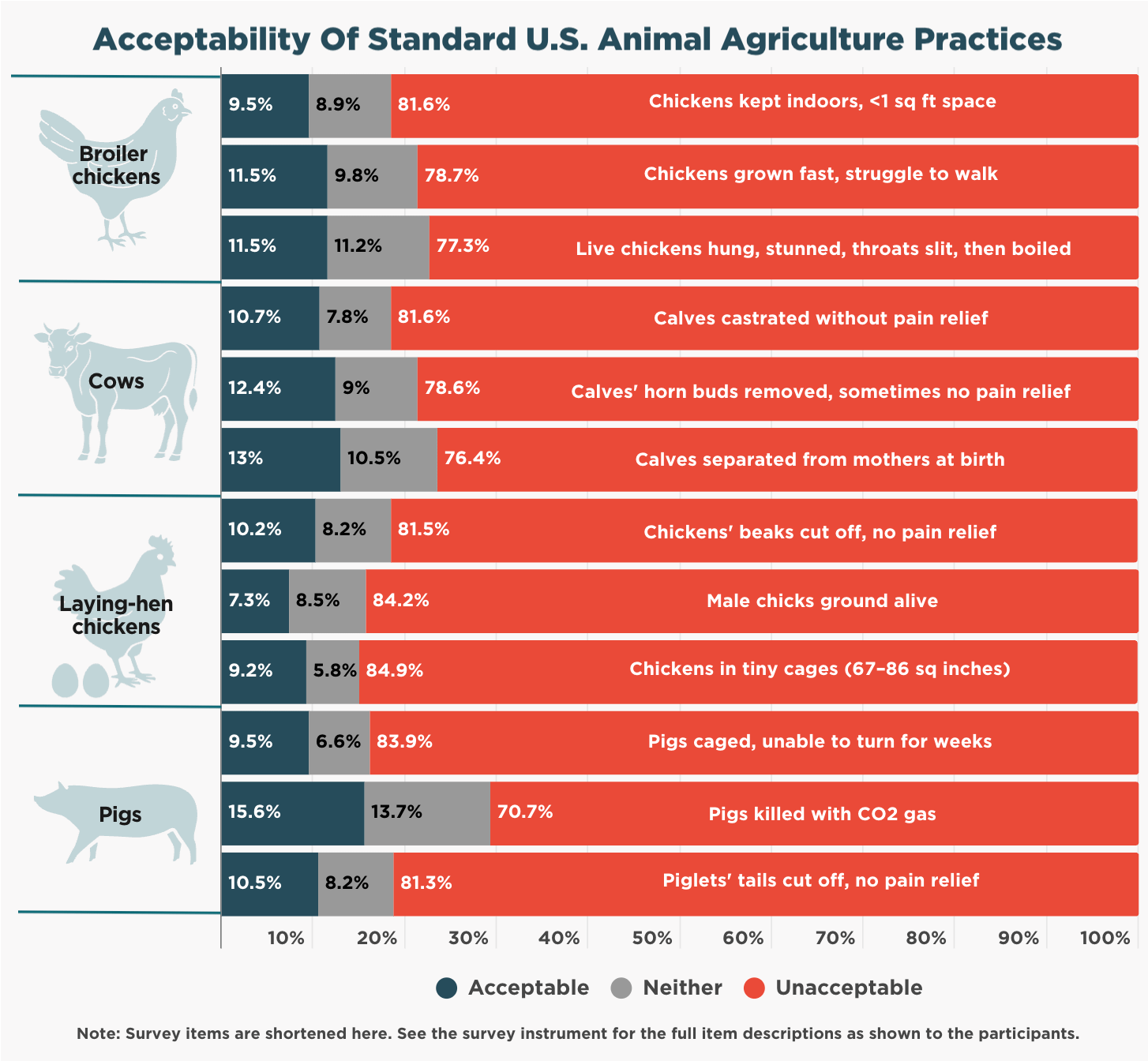
The scale and severity can elicit feelings of helplessness. But pragmatic approaches are finding success. Thanks to pressure from advocates and consumers, most US and EU grocery companies and food chains have pledged to stop selling eggs from caged hens. Due to pressure campaigns, some pig producers in countries like Brazil have reduced use of crates and stopped castrating piglets without pain relief. And governments in Europe have banned the maceration of day-old chicks and funded technology to ensure the ban is feasible.
These improvements don’t cost much either. Cage-free eggs add just 1-2 cents per egg to produce, while eliminating crates for mother pigs raises the price of a serving of pork by a few cents. For the average American, that’s maybe $10 a year – a rounding error for an annual grocery spend of $10,000.
If we were building our agriculture sector today, we’d never choose to make it this cruel just to save a few dollars. And therein lies the hope – at almost no cost we can end the extreme mistreatment of farm animals and have a food system that better matches our values.
Hi Martin. Thanks for the post.
"Chickens, the most farmed land animal"
Chickens are the most farmed land vertebrate. The population of farmed insects is larger, and there are more farmed insects slaughtered per year too (https://forum.effectivealtruism.org/posts/Rw3iXiJ4Fw4ePu4t6/forecasting-farmed-animal-numbers-in-2033).
If consumers are (generally) willing to pay the 'welfare premium' for better treatment of animals, and thus there is no additional cost to the producers, why have they not changed their behaviours? Is it e.g. because although any costs can be passed on, there are other downsides that we're not aware or don't fully appreciate?
And given the level of support, why is there not more regulatory push, given it is probably an easy way to win over voters?
It seems like there is enough precedent with bans on caged hens and macerating chicks that producers/supermarkets/politicians could win a lot of favour with consumers/voters.